

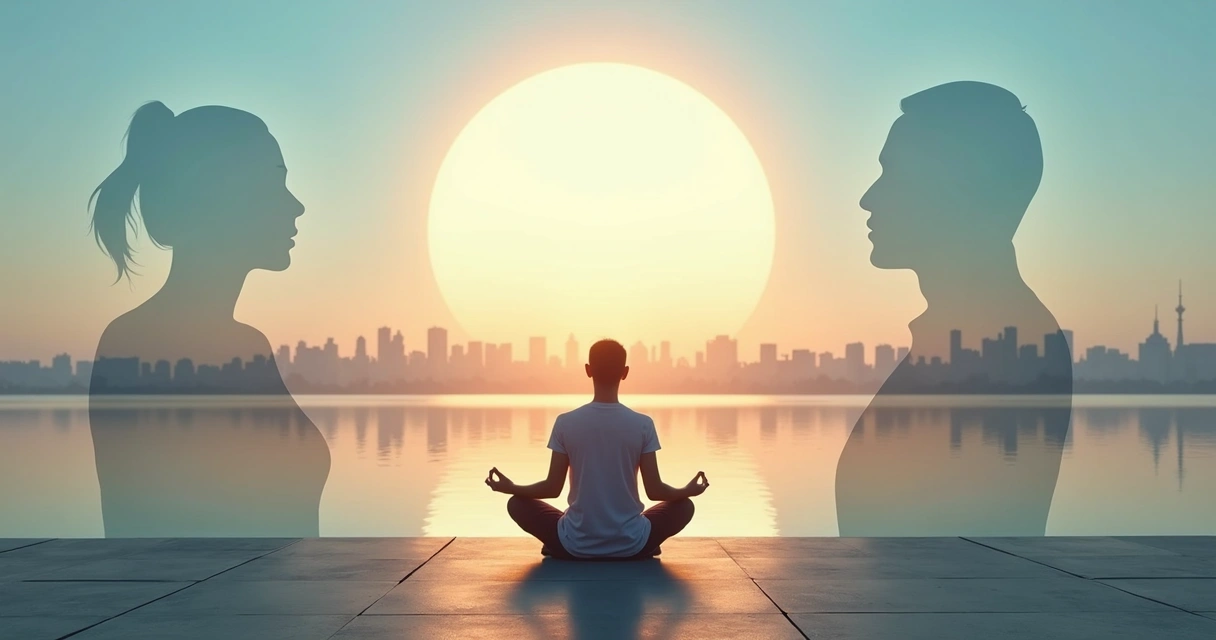
Social harmony is not simply the absence of conflict. It is the living pulse of a community, a nation, a world where different people—often wildly different—find ways to coexist, cooperate, and even care. But how do we move from inner divides to outer unity? We believe the answer begins inside each person and echoes out into the collective.
Why internal divides matter for the world outside
Internal divides might sound like private matters. However, as we have seen in recent global events, the way we handle disagreement within ourselves is echoed in our families, our organizations, and society as a whole. According to a 2021 Pew Research Center survey, in South Korea, 90% of people perceive strong partisan divides in society, with half calling them very strong. These are not just statistics. They point to a more profound pattern: our outer divisions often reflect unresolved splits inside us.
Peace in society starts as peace in ourselves.
When we are fragmented inside, everything—from our relationships to our workplaces—shows the cracks. Bitterness and blame become easier than dialogue and repair. We see this pattern across the globe, again and again.
Understanding where internal divides come from
We all carry multiple stories and loyalties inside us. Sometimes it feels as if we are made of different selfs, each with its priorities, beliefs, and wounds. Most of us learn to suppress or ignore the parts we do not understand. But suppression never integrates. Instead, it hides the divide, and the tension finds new ways to surface.
- One self may long for belonging; another demands freedom.
- We might admire compassion, but also crave recognition.
- Some parts want stability; others push for change.
According to research highlighting symbolic boundaries and social cohesion, these divisions can shape collective realities, just as they shape individual choices.
How internal divides impact social harmony
Social harmony is the balance where differences do not disappear but contribute to something larger. When our inner divides are unreconciled, we bring conflict with us into every room. We might take sides in a heated debate, not because we truly care, but to drown out an uncomfortable voice within. As a result, small disagreements escalate, communities fracture, and trust fades.
In our experience, unresolved inner tension often leads to external polarization. It is easier to point fingers than to sit quietly with our own contradictions. Many social divides evolve this way—when what we reject in ourselves is mirrored back to us by others.
Steps to reconcile internal divides
We have found that reconciling internal divides does not mean erasing differences inside us. Instead, it calls for a process: noticing, understanding, and integrating our contrasting parts. Below, we outline clear steps that help move from internal splits to a more harmonious world.
- Notice the tension within. The first sign is often discomfort or reactivity. Basic mindfulness—a pause before responding—helps us spot which part of us feels threatened or unseen.
- Name the voices. Once we notice, we can try to name the different voices or selfs. Is this my inner critic speaking, or the part of me still longing for approval? Name it, and it loses some power.
- Accept, do not reject. Integration starts with acceptance. Instead of wishing a part of us would go away, we can ask: “What does this self want for me? What is it trying to protect?” It is surprising how often our most disruptive parts carry wisdom if we listen without judgment.
- Seek understanding, not victory. Inner integration is not about making one part win and the other lose. Picture a board meeting where every voice gets five minutes. We can give our inner parts the same respect, letting them share their fears, hopes, and concerns without interruption.
- Identify shared needs. Often, conflicting inner parts actually want the same thing but have different strategies. For example, both craving control and freedom may seek safety in their own way.
- Honor the process. Reconciling our divides is not a one-time affair. We return to it with each new challenge and each new relationship. Every act of inner kindness ripples outwards.

Bridging internal integration to social spaces
What happens inside us travels into the spaces we share. Research discussed by the Brookings Institution shows that public spaces can either deepen or bridge divides, depending largely on how people show up in those spaces. When we reconcile our internal splits, we naturally act differently. We listen more. We react less. We bring curiosity instead of old defenses.
From our point of view, some powerful habits can help strengthen social harmony after internal work:
- Practice “both/and” thinking. Instead of seeing differences as a threat, we can recognize that many truths can coexist. “I need security, and I want growth. You too? Let’s work with both.”
- Engage in honest dialogue. When we have listened to all of ourselves, listening to others gets easier. Conflict turns into creative tension, and genuine understanding becomes possible.
- Build common ground. According to strategies outlined by the National Association of Counties, creating intergroup contact and finding commonalities are core to bridging divides. The same principle applies at the personal and community level.

Daily habits to support ongoing harmony
Reconciling internal divides is not something we do once and forget. It becomes a way of living, one that nourishes not only ourselves but those around us. Here are some habits we recommend in our experience:
- Take time each day to check in with your feelings, especially when triggered. Ask which part of you is activated.
- Celebrate small moments when you respond with understanding rather than judgment, both to yourself and others.
- Seek spaces—online or offline—where honest conversation and difference can coexist without fear.
- Practice gratitude for the strengths each of your inner selfs brings to your whole.
Every time we choose integration over division inside, we plant a seed for peace outside.
Conclusion
Internal divides are not a flaw, but a fact of being human. Still, they do not have to control our lives. When we choose curiosity over shame, dialogue over silence, and integration over suppression, we lay the foundation for genuine social harmony. The ripples of our inner work reach out into our communities, our countries, and our world. As the research shows, fostering harmony begins with the courage to look within and continues with choosing conscious action, one step at a time.
Frequently asked questions
What is internal social divide?
An internal social divide refers to the split or conflict that happens within individuals or groups, often based on differing beliefs, identities, or values. Inside a person, it can mean feeling pulled in different directions by competing desires or emotions. Within groups, it reflects disagreements and tensions that can fragment unity.
How to reconcile internal divides effectively?
The most effective way to reconcile internal divides is to recognize and accept conflicting parts without judgment. This involves mindful self-awareness, clear communication with yourself, and a willingness to see what each part needs. Approaching the process with curiosity and patience lays the groundwork for integration and peace.
Why is social harmony important?
Social harmony promotes peaceful coexistence, cooperation, and progress within communities and nations. It enables people to address challenges together, reduce conflict, and create environments where everyone can thrive. When harmony is present, trust grows and collective efforts become possible.
What are common causes of internal divides?
Common causes include conflicting values, unresolved emotional wounds, cultural membership, and experiences of trauma or exclusion. These sources often lead to inner tension, which, if not addressed, can show up as external conflict.
Can reconciliation improve community relationships?
Yes, reconciling internal divides equips individuals to participate in communities with greater empathy and openness. As people become more whole within themselves, their relationships benefit, and community ties strengthen. The effect can be transformative, fostering trust and shared purpose.