

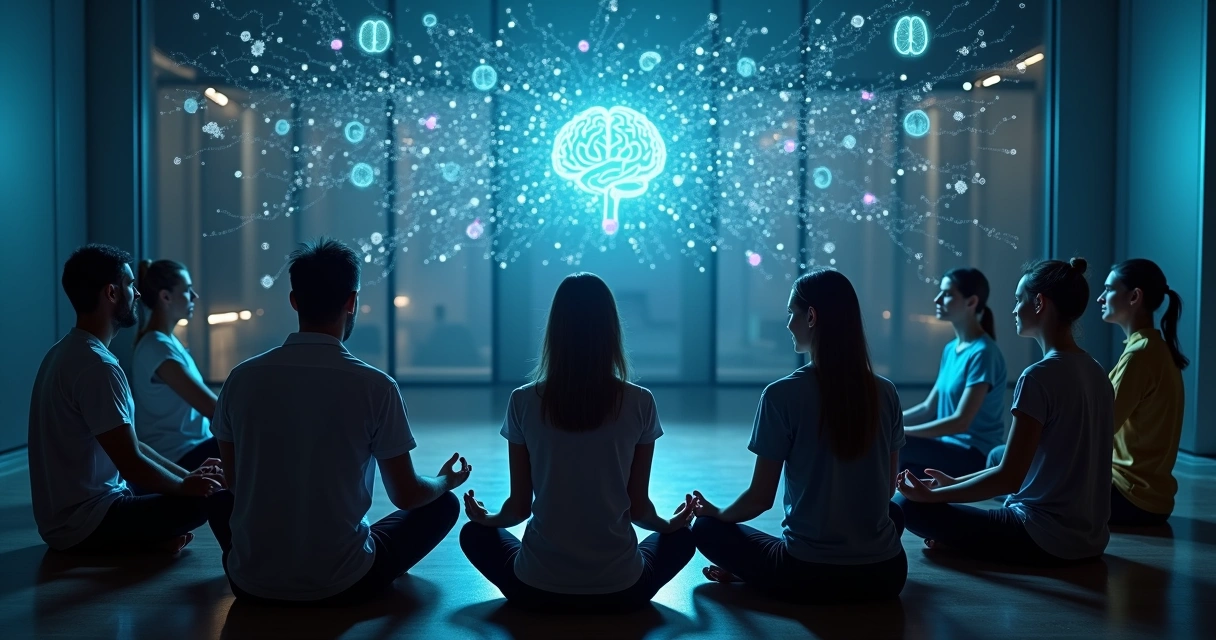
Have you ever walked into a room and instantly felt the mood, even before anyone said a word? Most of us have. There’s a subtle sense that something invisible is shared between people—an atmosphere, a wave, maybe even a field. For years, this was left to poets and philosophers. Today, neuroscience is stepping closer, seeking to understand if "group consciousness fields" are real, and if so, what makes them possible.
The mystery of group consciousness: a real challenge for science
The question that excites us is simple yet profound: Can groups create a field of shared experience that goes beyond individual minds? Neuroscience, with its careful methods and sharp instruments, is tackling this challenge with both skepticism and curiosity.
We see the roots of this question in everyday life:
- A theater silent with anticipation before the play begins
- The sense of unity in a well-synced orchestra
- Meetings where ideas seem to move as if by invisible agreement
- Meditation circles that leave people feeling deeply connected
These experiences pull us toward a deeper understanding of what groups really are.
Brainwaves, coherence, and collective states
One of the first clues comes from brainwaves. Neuroscientists have long known about brainwave synchrony: the tendency of brain activities to line up between people engaged in a shared task or emotional state.
For example, when people listen to the same story or music, or work together to solve a puzzle, their brainwaves can synchronize. This “neural synchrony” is measured using EEG (electroencephalography), which tracks electrical patterns over the scalp.
We have found that these synchronized moments often happen when people report feeling “connected” during group experiences. This doesn’t mean that all synchrony is group consciousness, but it hints at a shared neural rhythm.

But the most striking results arise in groups. In certain experiments, clusters of people meditating together or focused on a common task showed a kind of shared brainwave rhythm. Sometimes, even their heart rates started shifting together. Scientists have called this “physiological resonance.”
People in sync often feel greater empathy and unity.
We think this shows a shared state that goes beyond words or logic. While it’s early, these group effects are not just poetic—they show up in data.
How intention and emotion shape the field
What causes brains and bodies to link up like this? Our reading of current studies suggests intention and emotion play a big role.
Groups where members "tune in" purposefully (such as during meditation or intentional dialogues) create stronger coherence. When participants set an intention to connect, their neural data reflects it. The same holds with shared emotion; emotional stories, laughter, or joint focus all boost synchrony.
This gives us a model: a group field can grow stronger with shared purpose and open emotion. It explains why some meetings or gatherings never "click," while others feel powerful and transformative.
In social neuroscience, experiments continue to test these ideas under many settings:
- Choirs singing harmony versus simply standing together
- Sports teams visualizing victory or loss
- Families practicing gratitude as a group
- Peer groups training sustained attention in silence
Physiological connections are stronger when the group shares clear intent. The field isn't just the sum of its parts—it's a new level of organization.
Mirror neurons and shared experience
If you’ve ever caught someone’s yawn or felt goosebumps when a speaker got emotional, mirror neurons might be at work. Neuroscientists have identified these cells as the brain’s way of reflecting the actions and emotions of others.
Mirror neurons help us “catch” each other’s feelings, creating a subtle bridge between minds. In a group, this system acts like glue. It allows moods and intentions to ripple from person to person, sometimes leading to full-room resonance.
Some research has found that when groups engage in ritual or shared activity, the mirror neuron systems of each member become more active. We think this could be part of the mechanism behind group consciousness fields.
Put simply, the brain is built to connect—not just one-to-one, but many-to-many.
Beyond the brain: the body and the field
Neuroscience is also learning that the field of group consciousness is not just a brain event. Our bodies are involved.
- Breathing rhythms can sync up during shared music or meditation.
- Heart rates can change in tandem when people listen to an emotional story together.
- Hormones like oxytocin—sometimes called the “bonding hormone”—show spikes during moments of group trust or joy.
We are finding evidence that collective states exist both “in the head” and “in the body.” Some researchers have started speaking of “biofields”: subtle energy patterns that may link up when groups are tightly connected. This is early work, but it points toward a richer, less individual view of consciousness.
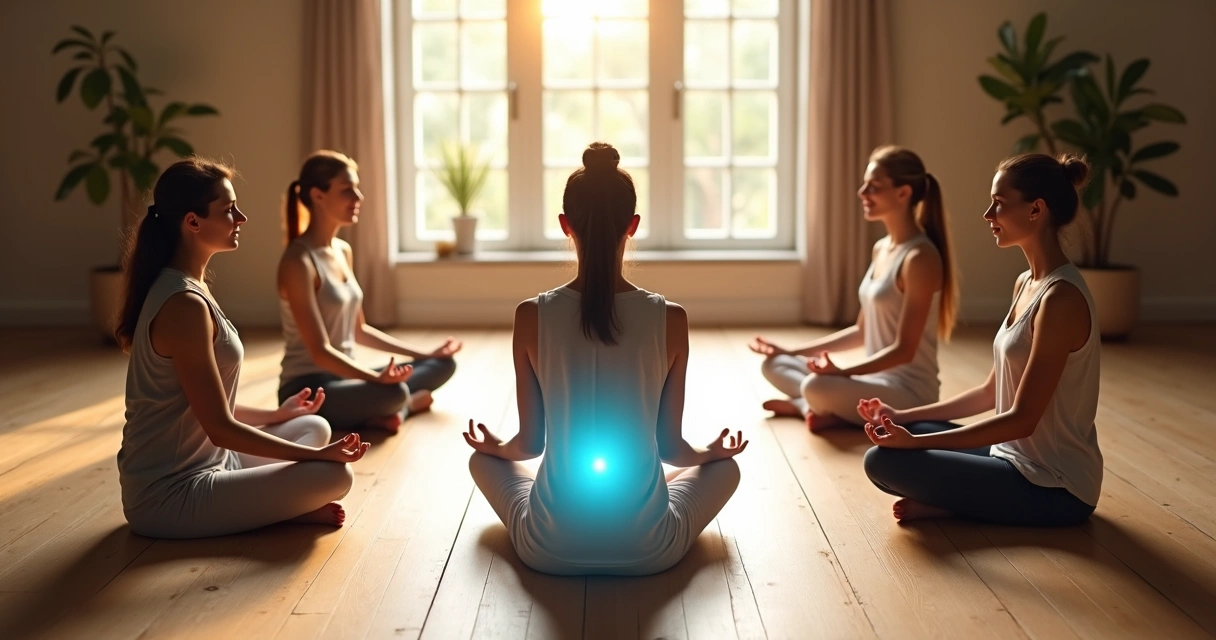
We believe the next decade will see even more science crossing the bridge between mind, body, and shared environment.
Applications: groups, organizations, and society
Why does all this matter? Because we are rarely alone—at home, at work, and in the wider world, we live in networks of shared consciousness. Our choices ripple out, shaping not only how we feel, but how groups function.
When leaders understand group fields, meetings become more effective, creative work flows easier, and conflicts can resolve faster. Families that practice shared mindfulness often see less stress and more connection. Group consciousness can become a resource, not just a phenomenon to study.
Here’s what we have seen in real settings:
- Teams that align intention before working together achieve better emotional balance
- Organizations that train group presence reduce friction and burnout
- Social movements fueled by shared emotion often achieve lasting changes
The science is still early, but the signs are encouraging. By learning how to “tune” our shared fields, we may unlock new forms of creativity and well-being.
What do we still not know?
Despite exciting findings, many mysteries remain. How long do group fields last? Can distance break them? What role does silence or physical touch play? Are there risks to certain kinds of group resonance, such as “hive mind” thinking?
What is clear so far: the boundaries of our minds are more fluid than we once thought. We’re only starting to map the territory.
Conclusion
Neuroscientists are beginning to unlock the mysteries of group consciousness fields. Evidence now suggests that brainwaves, bodies, and intention all play a role in creating the experience of collective connection. What was once just a feeling now has measurable traces. As research expands, we’re likely to see growing use of these insights in teams, families, and communities. Group consciousness fields are not only possible—they’re already shaping our lives in ways both subtle and powerful.
Frequently asked questions
What is a group consciousness field?
A group consciousness field is the shared feeling or state that emerges when people connect deeply in a group, often leading to synchronized thoughts, feelings, or even physiological patterns. This can happen in teams, families, or even large communities, and recent science is beginning to show how these group states can be measured.
How do scientists study group consciousness?
Scientists use tools like EEG (to measure brainwaves), heart rate monitors, and observation of group behavior to track when and how people align during shared experiences. In some cases, studies involve groups meditating, solving challenges together, or listening to stories, and researchers look for signs that brains, bodies, or emotions are syncing across members.
Can group consciousness fields affect behavior?
Yes, evidence suggests that group consciousness fields can influence how people act, feel, and interact in a group. People often report more empathy, better teamwork, and even changes in decision-making during times of high group coherence.
Are group consciousness fields scientifically proven?
While there is growing support from neuroscience and psychology, group consciousness fields are still a new area of study. Some forms, like synchronized brainwaves or heart rates, are well-documented. However, the bigger picture—like how these fields are formed or how far they reach—is still being researched.
How can I experience group consciousness?
You can try practices such as group meditation, focused group discussions, shared creative activities, or being present with others in silence. Many people report that shared intention, emotional openness, and mindful presence amplify the sense of group connection. The more you practice tuning into others, the stronger and more noticeable these shared fields can become.