


Collective intention is not a static idea or a trend. It is a force—a living pattern created by the shared focus, emotions, and will of a group at a given moment. The ability to measure this dynamic in real time is no longer the territory of theory or guesswork. Today, with simple yet meaningful tools and surprising clarity, we can observe the pulse of a team, organization, or community as it forms its direction and impact.
Why measure collective intention?
We often feel the hidden current in a group. Meetings that go nowhere, projects that stall, communities that lose their way—these are signs of misaligned intention. On the other hand, some teams move with quiet power, as if guided by one clear mind. Measuring collective intention is about recognizing the invisible forces that shape real-world outcomes.By turning invisible dynamics into visible data, we make space for clarity, intervention, and deeper harmony.
What we measure, we can guide.
In our experience, three needs keep coming up:
- The desire to recognize when group energy unites or fragments
- The wish for transparency, so that everyone can adjust course personally and together
- The hope to respond to changes early, before small misalignments snowball into real problems
What does collective intention look like?
Intention is about more than goals on a spreadsheet. It emerges from three layers:
- Attention: Where is the group focusing?
- Emotion: What feelings are present and shared?
- Purpose: What direction, spoken or unspoken, do members move towards?
The foundation: Measuring intention in the moment
We have seen many people believe that intention can only be tracked through results, long after the fact. But intention shapes reality in advance—it precedes action. That is why we focus on tools that capture the present state, with as little delay as possible.

Essential practical tools for real-time measurement
There are several reliable approaches to make collective intention visible in real time. Each serves a particular kind of group and situation.
1. Live digital polling and feedback platforms
Most groups already have access to basic online polling apps and feedback forms. With a few design tweaks, these simple tools become powerful windows into group intention. When used in moments of decision or brainstorming:
- Anonymous input reveals the true spread of focus and emotion—beyond surface agreement.
- Instant results allow a team to pause, shift, or strengthen its current direction.
- Follow-up questions uncover subtle hesitations or enthusiasm before they become visible in group behavior.
2. Sentiment tracking through language and emojis
In online workplaces, chats and forums are full of untapped data about group emotion. By offering real-time choices for sentiment (such as simple emoji reactions or mood sliders), groups can:
- Record felt emotion alongside each idea or update
- Map the mood of the group as it shifts throughout a session
- Spot drops in morale, tension, or excitement without waiting for formal surveys
3. Synchronization and coherence measurement tools
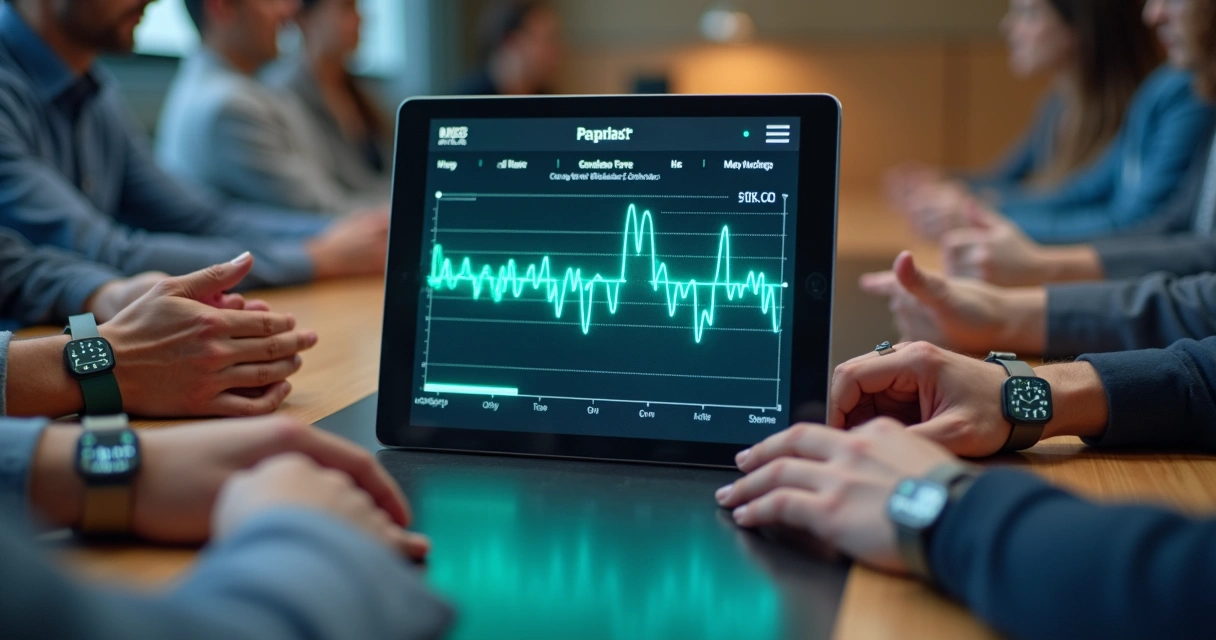
Some tools use heart rate, breath, or even synchronized movement to track physiological signs of coherence. When a group becomes more aligned—calm, focused, or energized—these signals show measurable changes. While not always practical for every context, we have seen how simple practices, like a minute of group breathing before difficult conversations, allow people to measure collective calm or tension immediately.
4. Visual whiteboards and intention mapping
Sometimes the most effective feedback comes from seeing intentions mapped visually. Collaborative whiteboards, both physical and digital, allow groups to:
- Place words, images, or color dots representing focus, alignment, or doubts
- Vote visually to show energy and direction at a glance
- Spot themes or misalignments by looking at patterns and clusters
5. Check-in and check-out rituals
Even with no technology, a group can measure its own intention in real time. Starting meetings with a question—"What are you bringing into this space today?”—and ending with, "Has your focus shifted?” brings awareness to the shared field. When answers are spoken, noted, or rated on a simple scale, groups create a living record and can sense shifts or splits quickly.
Making data meaningful: Interpreting signals and patterns
Numbers and graphs are not the end goal. The point is what those measurements mean for real experience and action. In our work, we have learned that:
- A high "yes" rate does not mean true alignment if many voices are silent or disengaged
- Sudden drops in positive emotion following a key announcement point to deeper issues
- Repeated themes of confusion or divergence show up long before deadlines are missed
Ethics and care in intention measurement
Trust is central to measuring collective intention. We must be gentle and transparent.
- Keep all data voluntary and anonymous when possible
- Avoid coercing emotional disclosure—presence alone is valid
- Share findings quickly and invite group reflection, not critique
Conclusion
The power to notice, share, and strengthen group intention is within our reach. With simple digital tools, mindful rituals, and honest questions, we bring the soft, living edges of group energy into the open. Measured intention is a conversation, not a verdict.
When we make the invisible visible, we regain our freedom to choose, together.
In every project, meeting, or community, this practice stands as a modest invitation: Pause, ask, sense, and shift—until what we build on the outside matches the best that lives inside our collective intention.
Frequently asked questions
What is collective intention measurement?
Collective intention measurement is the practice of making visible the shared focus, emotion, and direction of a group in a specific moment. It involves using simple or advanced tools to sense and record where group energy and attention align, and where they are divided.
How can I measure group intentions?
We measure group intentions by using live polls, emoji-based feedback, real-time check-ins, physiological syncing tools, and open visual mapping. Each method gives a unique window into the current state of focus, mood, and alignment.
What tools track intention in real time?
Several tools help track intention in real time. These include quick online polling apps, emotion tracking with emoji reactions, collaborative whiteboards for mapping intentions, and biofeedback devices for measuring physiological coherence. Group rituals like check-ins can be just as effective in small teams.
Are these intention tools accurate?
Intention tools offer a snapshot rather than absolute truth, highlighting patterns and shifts within a group. Their value lies in giving real-time feedback and prompting honest discussion, rather than delivering perfect measurements. Their accuracy improves with open participation and sensitive interpretation.
Where to find reliable measurement tools?
Reliable measurement tools are available through standard digital platforms most groups already use (polling apps, digital boards, chat functions). For physiological or advanced tracking, specialized hardware can also be used. Even simple group rituals or structured dialogue can serve as reliable real-time intention measurement methods.